Time Is Money: How Travel Choices Shape Your Day
Imagine waking up at 5 a.m. on a Monday, the soft glow of dawn seeping through the curtains, and knowing that the next hour will be spent navigating an airport maze, waiting in security lines, and fighting for an early boarding pass. That’s the reality for many travelers who choose commercial airlines. In contrast, the same morning on a private jet feels like stepping into a seamless, personalized portal where the clock is your ally, not an adversary.
Last year, I flew a critical meeting from New York to Chicago. I booked a commercial flight, endured a 30‑minute security wait, a 10‑minute taxi to the terminal, and an extra 45 minutes of boarding and de‑boarding. By the time I reached my office, the meeting had already begun. I later discovered that the same trip could have been accomplished in roughly two hours by a private jet—thanks to a direct route, an on‑demand departure time, and a dedicated driver awaiting my arrival.
Across the globe, the cumulative hours lost to procedural bottlenecks accumulate into a significant productivity drain. The difference between a commercial and a private jet, when measured purely in minutes, can transform a routine business trip into a strategic advantage. In the following sections, we will dissect the various stages of travel to illustrate how each decision point adds or subtracts time, and ultimately, value.
Checking In: The Gate vs The Front Door
Commercial airlines operate on a regimented schedule. Passengers must arrive at the airport well before departure—usually two to three hours for international flights, one to two for domestic—to clear security, check bags, and find the correct gate. The process involves waiting in line, navigating a labyrinth of kiosks, and often dealing with unforeseen delays, such as an over‑filled security lane or a malfunctioning scanner.
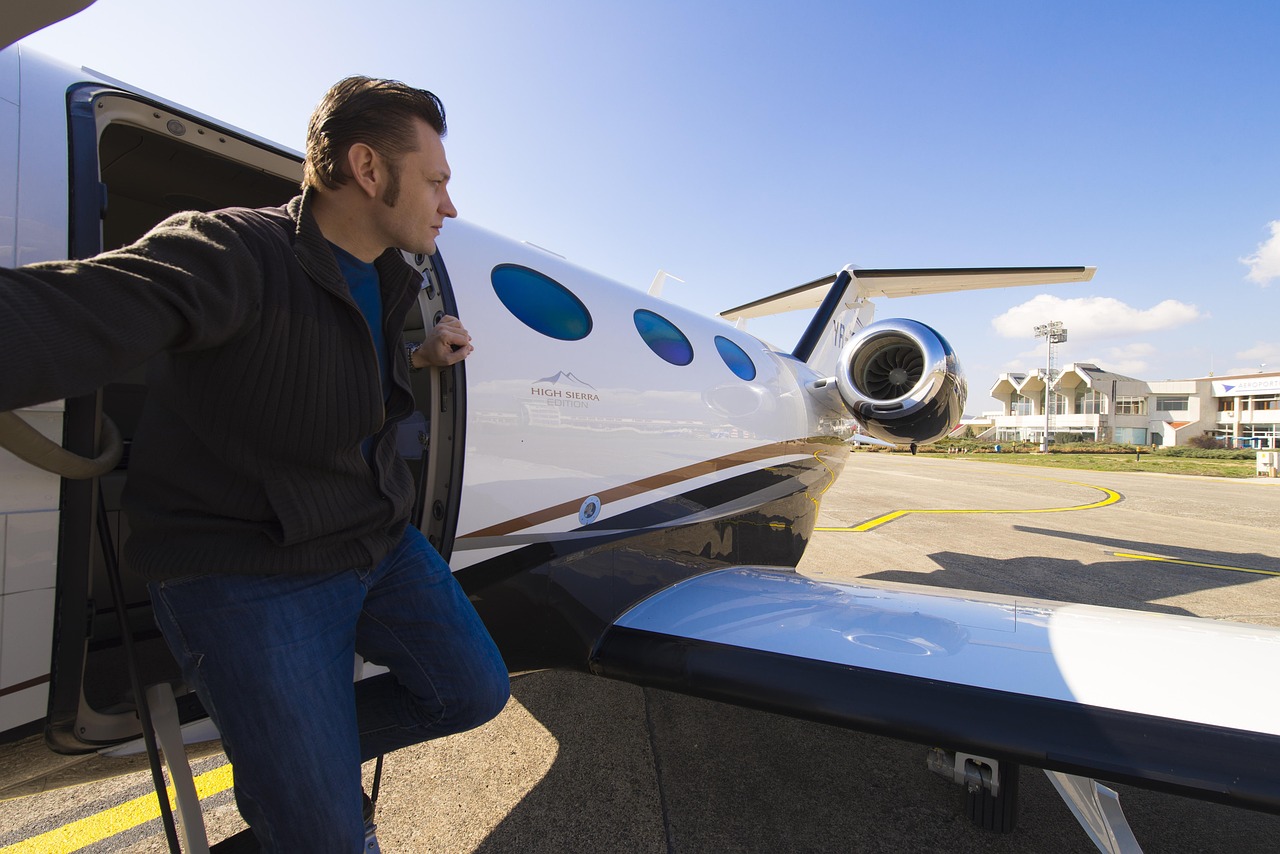
Private jet travel flips this model on its head. Once you arrive at the airport, the jet’s operator or your concierge coordinates with the crew to prepare the aircraft. You typically enter the jet through a dedicated front door, and the pilot begins the pre‑flight checks immediately. With no boarding lines or baggage claim, the time from arrival to take‑off can be reduced to just fifteen minutes, assuming the jet is already on the ramp.
Flight Path: Direct Routes vs Layover Loops
Commercial flights are bound by the hub-and-spoke structure of major airlines. Even the most efficient itinerary often includes a layover in a larger airport, followed by another transfer, each adding valuable minutes—or even hours—of travel time. The need to adhere to a timetable that accommodates thousands of other passengers can also limit flight options, forcing you to take the next available connection rather than the most direct path.
Private jets, on the other hand, enjoy the freedom to chart a direct line between origin and destination airports, or even between the private airfield of your client and the office you’re heading to. The absence of intermediary stops means you can cut out the extra travel time of layovers, often saving an hour or more for each segment of the journey. This advantage is especially pronounced on transcontinental flights, where the difference between a hub transfer and a straight flight can span two to three hours.
Onboard Productivity: Seating Arrangements and Speed
When you board a commercial airplane, you’re thrust into a high‑density environment. The cabin is designed to accommodate as many passengers as possible, meaning personal space is limited and ambient noise is a constant companion. Even the best business‑class cabins can feel cramped, with seats that barely accommodate a laptop or a briefcase, forcing travelers to fold devices and compromise on working conditions.
A private jet transforms the cabin into a mobile office. The spacious layout allows you to set up a desk, a high‑speed Wi‑Fi connection, and a comfortable chair—everything you need to run a meeting or prepare a presentation. The reduced noise level, coupled with the ability to control lighting and temperature, creates an environment where focus is restored quickly. This conducive setting often means you can accomplish in one hour what would take a commercial passenger several hours to complete in the same seat.
Speed itself is another critical factor. Commercial flights must adhere to the scheduled departure time, even if all conditions are perfect, while a private jet can adjust its take‑off to align with your itinerary. The result is a smoother, less interrupted journey, allowing you to transition from travel to work—or rest—without the downtime that commercial passengers endure.
From Arrival to Destination: Ground Logistics
Commercial travelers frequently find themselves waiting at airport terminals after landing, often in line for baggage claim, customs, and then a lengthy drive to the hotel or office. Depending on the city, traffic congestion can add an unpredictable buffer of time to your itinerary. Even when a private car is pre‑arranged, the process of picking up a passenger from a busy terminal can still be time‑consuming.
With a private jet, ground transportation is orchestrated from the moment you step off the aircraft. A luxury car or a chauffeur‑driven limousine is typically stationed at the jet’s arrival gate, ready to whisk you to your destination at a precise, pre‑arranged time. This eliminates the need for taxis, ride‑share apps, or shuttle services, and removes the variable of airport traffic because the jet’s runway typically offers direct, unimpeded access to a private hangar or a small airfield. The entire transition from the sky to the street can be as swift as five minutes.
Delays and Weather: Predictability Matters
Commercial airlines are notoriously susceptible to weather‑related delays. A single storm can ripple through thousands of flights, pushing back arrivals and causing cascading schedule disruptions. Even when weather conditions are nominal, airlines often cancel flights to maintain operational safety, forcing passengers to scramble for alternative arrangements.
Private jet operators, however, possess the flexibility to adjust or even cancel a flight without the constraints of a larger fleet. They can choose alternate airports, shift departure times, or, in extreme cases, ground the aircraft until conditions improve—often with minimal impact on the traveler’s schedule. Because these flights are operated by a single pilot and a small crew, decision making is swift and tailored to the passenger’s priorities, ensuring that weather or operational hiccups do not translate into lost hours.
Flexibility and Freedom: Setting Your Own Clock
Commercial flights run on a fixed timetable that is largely out of the passenger’s control. You must plan your day around departure and arrival times, which may not align with the optimal windows for meetings or client visits. Adjusting to a new schedule often requires renegotiating appointments or incurring additional costs.
Private jet travel offers the luxury of a self‑made schedule. You can arrive at a destination before a critical meeting, depart at an hour that best suits your itinerary, and even split your journey into multiple legs that align with business objectives. This level of control means you can avoid peak travel hours, sidestep traffic, and align your arrival with personal or professional commitments, thereby saving time that would otherwise be spent waiting or rescheduling.
Moreover, the ability to change itineraries on the fly—such as adding an overnight stay, or redirecting to a secondary destination—creates a flexible framework that can adapt to evolving business landscapes. This adaptability translates directly into reduced downtime and increased productivity.
Takeaway: Minutes That Add Up to Success
When you break down the entire travel experience—check‑in, boarding, flight time, de‑boarding, ground transport, and unforeseen delays—private jet travel consistently demonstrates a superior time efficiency over commercial airlines. Even a single flight can save an hour or more, and the cumulative benefit over a busy business year can amount to dozens of valuable hours.
For executives, entrepreneurs, and anyone whose schedule is measured in minutes, investing in private jet travel is more than a luxury; it’s a strategic tool that can sharpen competitiveness, enable swift decision‑making, and preserve the energy required for high‑level performance. Time saved on the ground is time gained in the boardroom, on the negotiating table, or simply for a moment of reflection. Choosing a private jet is choosing to make every minute count toward your success.